
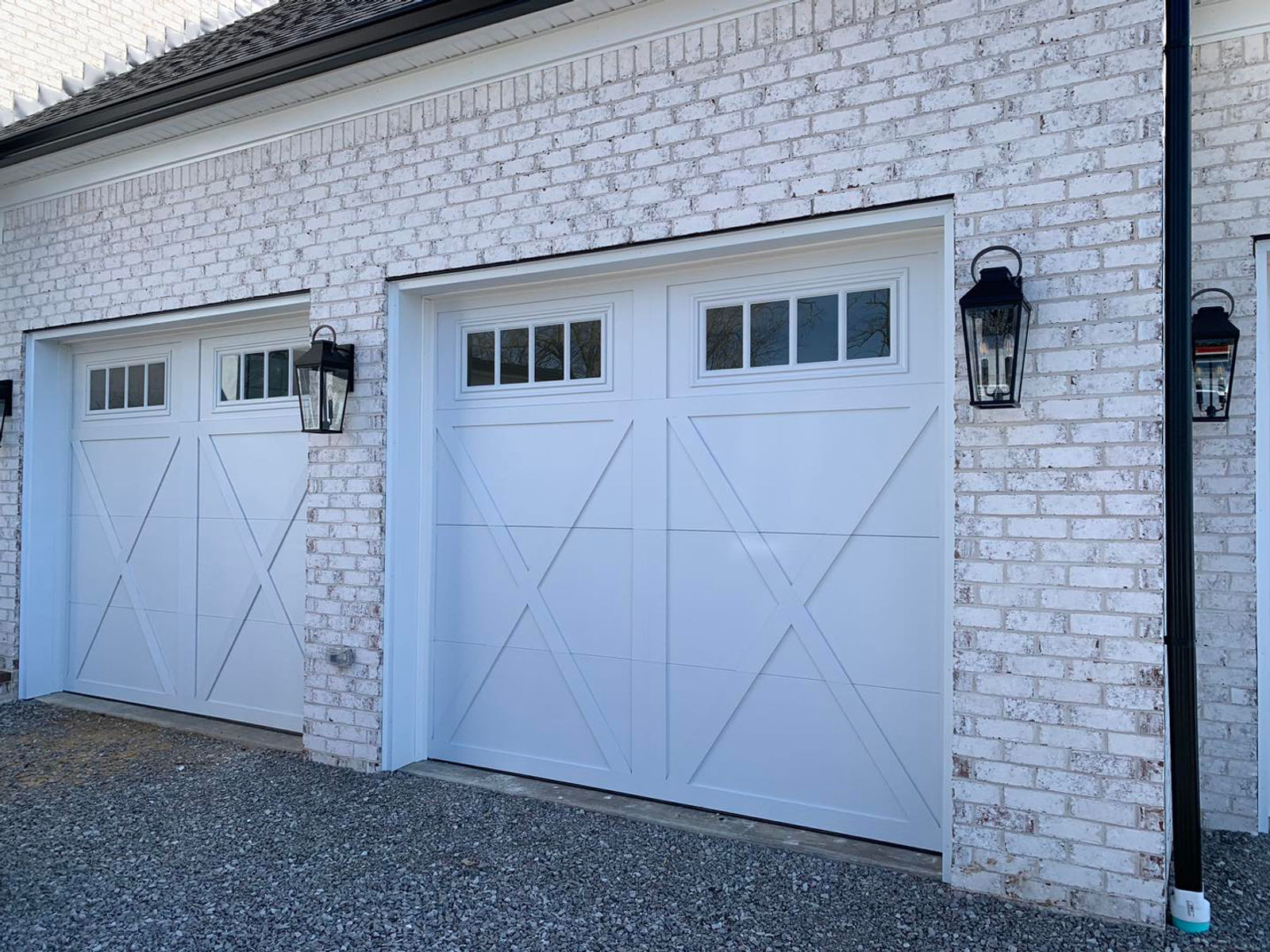
How to Get an Accurate Garage Door Quote: Measurements, Photos and Questions to Ask
By E-Z Open Garage Door Service, Inc. Published
Quick answer
To get an accurate garage door quote, measure the opening's width and height, the side room, headroom and backroom, and photograph the door from inside and outside, the spring area, the opener and any damage. Share the door's symptoms, the opener you have, and what you want installed. Then ask every company what is included, whether the opening is measured on site, and for a written, itemized quote so you compare the same scope.
Published · Reviewed
Part of our Garage Door Installation & Replacement guides.
What makes a garage door quote accurate?
A garage door quote is accurate when it is based on the real size of the opening, the space around it, the opener and the condition of the existing parts, rather than on a door size guessed over the phone. Garage door pricing depends on the door, the opener and the parts the opening needs, so every detail you can share up front narrows the gap between the first number and the final one.
Most quote surprises come from three gaps: an opening that is not the standard size it looked like, too little room above or beside the door for the hardware, and parts such as tracks or springs that turn out to need replacing along with the door. You can close most of those gaps yourself with a tape measure, a phone camera and ten minutes in the garage.
The rule to remember: a quote can only be as accurate as the measurements, photos and symptoms it was built on.
Which measurements should you take before asking for a quote?
Take five measurements from inside the garage with the door fully closed: the width and height of the opening, the side room on each side, the headroom above the opening and the backroom to the rear wall. Write each one down in feet and inches. If a term is unfamiliar, see our garage door glossary.
- Width: measure the finished opening from one inside jamb to the other.
- Height: measure from the floor to the underside of the header at the left, center and right. Garage floors are often sloped, especially in older homes, and the three numbers may not match. Note all three.
- Side room: measure from each edge of the opening to the nearest wall or obstruction. The vertical tracks mount here.
- Headroom: measure from the top of the opening to the lowest point of the ceiling or anything hanging from it, such as a beam, duct, pipe or light. The springs and the curve of the track need this space.
- Backroom: measure along the ceiling from the header to the back wall of the garage. The horizontal tracks and the opener rail need this depth.
One door distributor's measuring guide gives typical requirements of about 3.75 to 5 inches of side room for the vertical track, 12 to 15 inches of headroom for a standard torsion spring setup, and backroom of at least the door height plus 18 inches, with more needed for an opener rail. Exact minimums vary by door and hardware, which is why the installer confirms them on site.
Measure only what you can reach safely. Use a stepladder that stands clear of the door, and keep your hands away from the springs, the cables and the bottom brackets. Those parts are under high tension and are for a trained technician only; you do not need to touch them to measure the opening.
What photos help a garage door company quote the job?
Photos of the whole door from inside and outside, the hardware above the opening, the opener and any damage give a garage door company most of what it would otherwise learn on a first visit. Take them in good light with the door closed.
- The full door from outside, showing the style, the panels, any windows and the trim around the opening.
- The full door from inside, showing the tracks on both sides and the area above the door.
- The spring area above the door, taken from the floor. This shows whether the door uses torsion springs on a shaft above the opening or extension springs alongside the tracks.
- The opener, including its label if you can photograph it from the floor, and the rail that runs to the door.
- Close-ups of any damage: dented or cracked panels, rust along the bottom section, a bent track, a frayed cable or a worn bottom seal.
- Anything in the way: low beams, ductwork, shelving, lights or storage near the tracks.
A short video of the door opening and closing is especially useful for repair quotes, because sound and movement reveal problems a still photo cannot. As a general principle, a photo of the opening from inside the garage answers more quoting questions than any description of it.
What details should you share along with the measurements?
Share what the door is doing now, what you want it to do, and anything about the property that affects the work. For a replacement or new installation, that includes the size of the opening, the door style or material you have in mind, whether you want an insulated door, and whether you are keeping the current opener or replacing it.
For a repair, describe the symptoms as specifically as you can: the noise and when it happens, whether the door moves unevenly or hangs crooked, whether it reverses, whether the opener hums without moving the door, and how old the door and opener are if you know. Our post on how we diagnose a failing garage door motor over the phone shows how much a clear description of the sound can narrow down.
Property details matter too. Tell the company if the garage is attached to living space, if the opening is on a detached shop, barn or farm building, if the home is in a historic district with design rules (see navigating replacements in Danville's historic districts), or if the work is for a commercial building or a new-construction project. Central Kentucky's mix of older homes, rural outbuildings and new subdivisions means openings vary more than many people expect.
What questions should you ask any garage door company?
Ask every company the same questions so the quotes you compare cover the same scope. A lower number often means something has been left out, and the only way to find out is to ask.
- What exactly is included? Removal and haul-away of the old door, new tracks or reused tracks, new springs sized to the new door, cables, rollers, hinges, weather seals and reconnecting or replacing the opener.
- Will the opening be measured on site before ordering? A quote built on unverified measurements can change once the door arrives.
- What door construction is quoted? Ask about the material, whether the door is insulated and its R-value if so, and the steel thickness for steel doors. Our comparisons of door materials and insulated vs. non-insulated doors explain why those details change the price.
- What springs are quoted? Ask what type of spring is included and what cycle life it is rated for.
- Will the safety features be tested? Ask whether the opener's auto-reverse and photo-eye sensors will be adjusted and tested after installation.
- Is the quote itemized and in writing? A written, itemized quote is the easiest way to compare companies line by line.
- How can I pay? Ask about payment timing and whether financing is available.
For context on why the cheapest quote is not always the lowest-cost door, read Are Discount Garage Doors Worth the Initial Savings?
Should you repair or replace before you ask for a quote?
You do not need to decide before asking. A good quote request describes the problem and lets the company recommend a repair, a tune-up or a replacement, with the reasons for each. If you want to understand the trade-offs first, read Repair or Replace Your Garage Door? and, for the opener, Repair or Replace Your Garage Door Opener?. Commercial property owners comparing ongoing coverage should also see service contract vs. on-call repair.
EZ Open's approach is to diagnose the door, explain when a panel or component repair is safe versus only temporary, and recommend replacement only when the door's condition, damage, age or the design you want supports it.
How do you request a free quote from EZ Open?
Request a free quote from EZ Open by calling 859-239-9090, emailing, or using the contact form. Tell the team what your door is doing or what you would like installed, and include the measurements and photos above if you have them. Quotes are always free. Regular hours are Monday through Friday, 8:00 am to 4:30 pm.
For new doors, EZ Open measures, orders and installs. Every installation starts with careful measuring, so the door that is ordered is the door that fits the opening. If the project is larger than you planned for, financing through GreenSky is available on qualifying projects, subject to credit approval; see the financing page for plan options.
E-Z Open Garage Door Service, Inc. is locally owned and has served homeowners, businesses and contractors across Central Kentucky since 1996, and it holds a 5.0 Google rating from 195 reviews. Request a free quote or call 859-239-9090.
Frequently asked questions
How do I measure my garage door opening for a quote?
With the door closed, measure the width between the inside jambs, the height from the floor to the header at the left, center and right, the side room beside each edge, the headroom from the top of the opening to the lowest ceiling obstruction, and the backroom from the header to the rear wall. Keep clear of springs, cables and bottom brackets while you measure.
Can I get an accurate garage door quote over the phone?
A phone or online quote can be close when you share measurements, photos and the details of the opener and the symptoms. The installer still confirms the measurements on site before a new door is ordered, because sloped floors and obstructions can change what fits.
Does EZ Open charge for quotes?
No. EZ Open quotes are always free. Call 859-239-9090, email, or use the contact form to request one.
How much does a new garage door cost?
Pricing depends on the door, the opener and the parts the opening needs, including size, material, insulation and whether tracks and springs are replaced. The most reliable way to a firm number is to request a free quote with your measurements and photos.
What should a written garage door quote include?
A useful written quote lists the door model or construction, the size, insulation, springs, tracks and hardware, the opener work, removal of the old door, and any extra work the opening needs. Itemized quotes make it easy to compare companies on the same scope.
Do I need to know my door's spring type before asking for a quote?
No. A photo of the area above the door taken from the floor usually shows whether the door uses torsion or extension springs. Never touch or adjust the springs to find out; they are under high tension and are for a trained technician only.
Sources
- Mid-Atlantic Door Group — How to Measure for a Garage Door: Step-by-Step Measuring Guide — measuring width between jambs, height at three points, and typical side room (3.75–5 in.), headroom (12–15 in. for standard torsion springs) and backroom (door height + 18 in.) requirements.
- DASMA — Safety Tips — springs are among the most dangerous parts of a garage door and can cause injury when they break.
Why Central Kentucky calls EZ Open
- Locally owned, serving Central Kentucky since 1996
- 5.0 on Google from 195 reviews
- After-hours emergency service available
- Financing through GreenSky®, subject to credit approval
Let's get you moving again.
Call us, email us, or request your free quote online. After-hours emergency service is available.