
Steel vs. Wood vs. Aluminum & Glass Garage Doors: Which Fits Your Home?
By E-Z Open Garage Door Service, Inc. Published
Quick answer
Steel fits most homes: it is durable, low-maintenance and offers the widest range of insulated options, though its bottom section can rust if the finish is broken. Wood fits high-character and historic homes whose owners will seal and refinish it regularly in Kentucky's humid, freeze–thaw climate. Aluminum and glass full-view doors fit modern homes and spaces that need natural light, but they insulate the least and dent more easily than steel.
Published · Reviewed
Part of our Garage Door Installation & Replacement guides.
Steel, wood or aluminum and glass: which garage door material fits your home?
Steel fits most homes that want durability, low upkeep and the widest choice of insulated options; wood fits homes where authentic natural character matters most and the owner accepts regular refinishing; aluminum and glass fits modern designs and spaces that need natural light, with the least insulation of the three. The right choice comes down to how the garage is used, how much maintenance you are willing to do, and how the door needs to look from the street.
EZ Open installs steel, wood and full-view glass panel lines for residential and commercial openings. The best garage door material is the one whose maintenance demands match how much upkeep you will actually do.
How do steel, wood and aluminum and glass doors compare side by side?
The three materials differ most in maintenance, resistance to Central Kentucky moisture, insulation potential and appearance. The table below compares them on the factors that usually decide the purchase.
| Factor | Steel | Wood | Aluminum and glass (full-view) |
|---|---|---|---|
| Appearance | Raised-panel, carriage-house or flush designs; many colors; some offer wood-look finishes | Authentic grain and natural character; can be stained or painted | Modern, contemporary look; large glass areas |
| Routine maintenance | Low: wash, inspect bottom edge, touch up scratches | High: periodic sealing, staining or painting | Low to moderate: clean glass and frames, check seals |
| Moisture and weather | Can rust where the finish is broken, usually at the bottom section | Can absorb moisture, warp or rot without upkeep | Aluminum does not rust the way steel can; seals and glazing need checking |
| Dent and impact resistance | Varies with thickness; thin single-layer doors dent easily | Resists small dents; can crack or split | Aluminum frames dent more easily than steel; glass can break |
| Insulation potential | Widest range, from non-insulated to multi-layer insulated | Natural wood offers some resistance; insulated options vary by design | Lowest; glass area limits insulation |
| Natural light | Only through optional window sections | Only through optional window sections | High; the door is largely glass |
| Best fit | Most homes, attached garages, families wanting low upkeep | Historic or high-character homes with an owner committed to upkeep | Modern homes, workshops, showrooms and commercial spaces needing light |
When is a steel garage door the right choice?
A steel garage door is the right choice when you want a durable, low-maintenance door with the most options for insulation and style. Steel doors range from thin, single-layer builder-grade doors to multi-layer doors with an insulated core sandwiched between steel skins. That range matters: the thinnest single-layer doors dent easily and offer little resistance to temperature swings, while a multi-layer insulated steel door is much more rigid.
The weak point of steel is the bottom section, where water pools on the driveway and road salt splashes in winter. Once the finish is scratched or worn through, rust can start and spread. Rinsing the bottom section, keeping the bottom seal in good shape and touching up scratches slows that process. Steel offers the broadest combination of durability, insulation options and low upkeep, which is why it suits most homes. If you are tempted by the cheapest steel door on the market, read our post on whether discount garage doors are worth the initial savings first; it covers steel gauge and construction quality in detail.
When is a wood garage door worth the upkeep?
A wood garage door is worth the upkeep when the home's character calls for genuine wood and the owner is prepared to maintain it. Real wood brings grain, depth and warmth that suit historic homes, craftsman and farmhouse styles, and properties where the garage faces the street. It also brings a maintenance schedule: wood needs sealing, staining or painting on a regular basis to keep moisture out.
In Central Kentucky, that schedule is not optional. Humid summers and wet, freezing winters drive moisture into unprotected wood, and repeated expansion and contraction can warp sections over the years. Wood doors are also typically heavier than comparable steel doors, so the springs and opener must be sized for the door. A wood garage door rewards owners who maintain it and punishes owners who do not. We cover the real-wood versus faux-wood question in depth in Wood vs. Faux-Wood Garage Doors: Maintenance Realities in Kentucky, so it is not repeated here. If your home is in a historic district, see garage door replacements in Danville's historic districts as well.
When does an aluminum and glass door make sense?
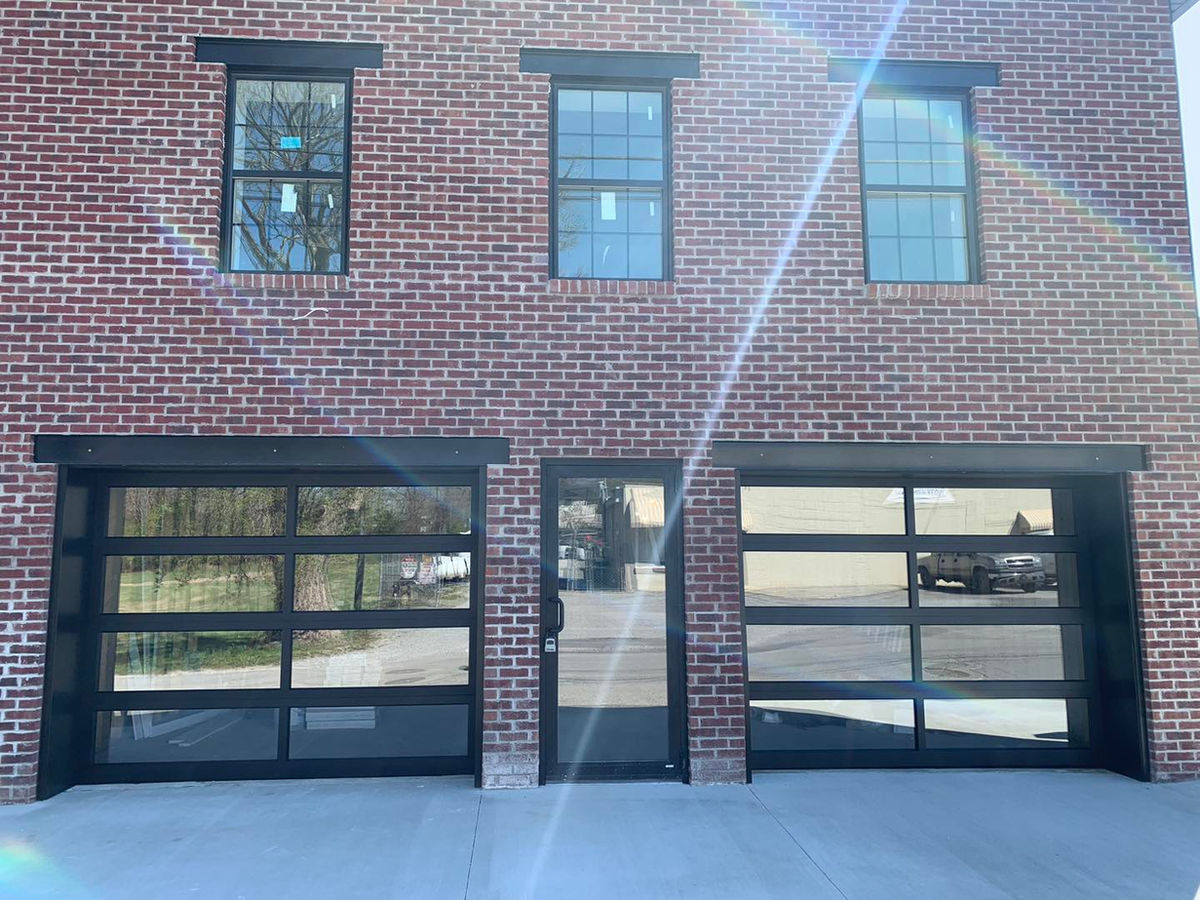
An aluminum and glass door makes sense when natural light and a modern look matter more than insulation. Full-view doors are built from a framework with glass panels filling most of each section, so the door reads as a wall of glass when closed. They suit contemporary homes, garages converted to workshops, gyms or studios, and commercial spaces such as showrooms or service bays where light and visibility help.
The trade-offs are insulation and impact resistance. Glass offers far less resistance to heat flow than an insulated door section, and aluminum frames dent more easily than steel. Aluminum does not rust the way steel can, which helps in damp conditions, but the seals around the glass need periodic checks. A full-view glass door is a lighting and design decision first and a thermal decision last. If the garage is attached and heated, compare carefully with an insulated option; our guide to insulated vs. non-insulated garage doors explains why.
How does insulation change the material decision?
Insulation changes the decision because the insulating value of a door comes mostly from its core, not its skin. In DASMA's technical guidance on garage door thermal values, the R-values of steel and other metal facings are considered negligible; the insulation material between the skins does the work. DASMA also explains that a calculated R-value describes only the center of a door section, while a tested U-factor describes the whole installed door, including joints and seals.
In practice, a multi-layer insulated steel door offers the most thermal choice, wood falls in between depending on construction, and a full-view glass door offers the least. For an attached garage, the insulated core matters more than the material on the outside. For the full explanation of what the numbers mean, see garage door R-value explained.
How can you preview styles before you decide?
The quickest way to preview styles is the door designer on our homepage, where you can pick a style, color and windows and send the design to a quote. The designer shows visual previews of the steel, wood and full-view glass panel lines; exact panel designs, colors and glass options are confirmed with you before anything is ordered.
From there, a site visit settles the practical details: the size of the opening, the headroom and side room for track, the condition of the framing, the weight the springs and opener will need to carry, and how the door will look against the house. Pricing depends on the door, opener and parts, and our guide to getting an accurate garage door quote lists what to have ready. If you are replacing an existing door, start with whether to repair or replace it.
Frequently asked questions
Which garage door material needs the least maintenance?
Steel generally needs the least routine maintenance: occasional washing, keeping the bottom seal in good condition and touching up scratches before rust can start. Aluminum and glass doors are also low-maintenance, while real wood needs periodic sealing, staining or painting.
Do wood garage doors hold up in Kentucky weather?
They can, with consistent upkeep. Humid summers and freeze–thaw winters push moisture into unprotected wood, which can lead to warping or rot. Owners who keep the finish sealed get the best results; our blog post on wood vs. faux-wood doors covers the maintenance in detail.
Are glass garage doors secure and private?
Full-view doors trade some privacy for light. Glass options vary, and the exact glass for your door is confirmed before anything is ordered, so privacy needs should be raised during the quote. For garages that hold valuables or adjoin living space, weigh privacy and insulation alongside appearance.
Does the door material affect my garage door opener?
Yes, through weight. Heavier doors such as solid wood need springs sized to counterbalance them, and the opener must suit the door it drives. Springs are sized and adjusted by a trained technician, never by the homeowner.
Which material is best for an attached garage?
For an attached garage, especially one with a room above it, an insulated steel door is usually the strongest all-round choice because the insulated core matters more than the facing material. Wood and glass doors are chosen mainly for appearance and light.
How much does each garage door material cost?
Pricing depends on the door, opener and parts, plus the size of the opening and the design you choose. Request a free quote through our contact page or call 859-239-9090.
Sources
- DASMA — Technical Data Sheet #163, U-factor and R-value for Residential and Commercial Garage Doors — R-values of steel and other metal facings are negligible; calculated R-value covers only a door section, tested U-factor covers the whole installed door.
Need a technician?
Springs, cables and off-track doors are jobs for a trained technician. We diagnose the door and explain your options.
859-239-9090 Request serviceLet's get you moving again.
Call us, email us, or request your free quote online. After-hours emergency service is available.