
What Happens During a Garage Door Tune-Up (and What a Good One Includes)
By E-Z Open Garage Door Service, Inc. Published
Quick answer
During a garage door tune-up, a technician asks about symptoms, disconnects the opener to test the door by hand, inspects springs, cables, rollers, hinges and tracks, lubricates the moving parts, tightens hardware, rebalances spring tension if needed, and finishes by testing the auto-reverse and photo-eye systems. The door industry recommends one professional visit a year on top of monthly homeowner safety checks. A good tune-up always explains any worn part before more work is done.
Published · Reviewed
Part of our Garage Door Maintenance & Tune-Up guides.
What is a garage door tune-up?
A garage door tune-up is a scheduled professional service visit that inspects, balances, lubricates, tightens and safety-tests the whole door and opener system before a part fails. It is preventive work, not a repair call, though a good tune-up often finds the worn part that would have caused the next breakdown.
The industry baseline is simple. The Door & Access Systems Manufacturers Association (DASMA) recommends that homeowners do monthly safety checks and have a professional visit once a year. A tune-up is that annual visit. It covers the work homeowners should not do themselves, especially anything involving spring tension, along with a more thorough version of the checks homeowners can do.
A garage door tune-up is the annual professional counterpart to the homeowner's monthly safety checks.
What does a good tune-up include?
A good tune-up includes five things: a conversation about symptoms, a manual test of the door with the opener disconnected, a top-to-bottom inspection, lubrication and tightening, and a final safety test with the opener reconnected. Shortcuts usually skip the manual test and the safety test, which are the two steps that reveal the most.
- Symptom intake. The technician asks what the door has been doing: noises, hesitation, reversals, slow travel. Intermittent problems rarely show up on a single cycle, so the owner's description matters.
- Manual operation. The opener is disconnected and the door is moved by hand. That is the only way to feel friction, binding and imbalance that a motor would otherwise hide.
- Component inspection. Springs, lifting cables, drums, rollers, hinges, tracks, brackets, the bottom seal and the opener's drive (chain, belt or screw) are each examined for wear.
- Service work. Moving parts are lubricated, loose fasteners are tightened, and spring tension is adjusted if the door is out of balance.
- Safety verification. The reversal system and photo-eyes are tested, and opener travel limits are checked so the door closes fully without slamming.
If a tune-up never disconnects the opener to feel the door by hand, it is a lubrication visit, not a tune-up.
How does a technician check door balance?
A technician checks balance by disconnecting the opener and moving the door by hand to see whether it lifts smoothly and holds its position partway open. The U.S. Consumer Product Safety Commission (CPSC) defines a properly operating door as "balanced," meaning it stays in place when stopped in any partially open position.
Balance matters because the springs, not the opener, are supposed to carry the door's weight. When springs lose tension over years of cycles, the opener ends up lifting dead weight. That strains its gears and motor, and a severely unbalanced door can drop unexpectedly. Restoring balance means adjusting spring tension, and that adjustment is technician-only work. DASMA says spring systems should be repaired only by trained professionals because of the tension involved.
Balance is the single most informative test in a tune-up, because it shows whether the springs are still doing their job.
What gets lubricated, and what shouldn't?
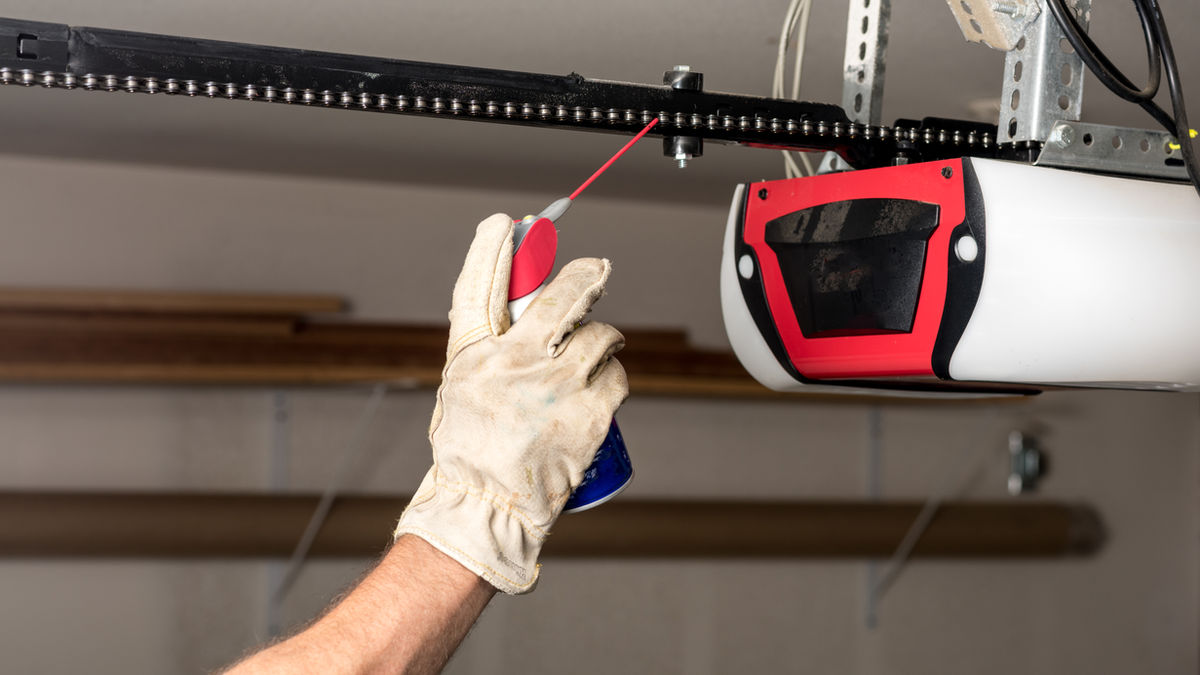
A tune-up lubricates the parts that pivot or rotate: roller bearings, hinges, the spring coils and bearing plates, and the opener rail or drive where the manufacturer calls for it. The inside of the track should be cleaned, not greased. The International Door Association (IDA) recommends lubricating hinges, rollers and tracks with a small amount of spray lubricant, and DASMA recommends a spray lubricant made for garage doors as the first fix for squeaky springs.
The product matters as much as the placement. Central Kentucky swings from humid summers to freezing winters, so lubricant has to stay workable across that range. Heavy grease can stiffen on cold mornings and add friction, which is one reason doors behave differently after the first cold snap. Our blog post on why automatic doors reverse when the temperature drops explains how that happens.
Good lubrication targets the pivot points and leaves the track channel clean, because grease in the track collects grit.
How are the safety systems tested during a tune-up?
The safety systems are tested by closing the door on an obstruction to confirm it reverses, and by breaking the photo-eye beam to confirm the door stops and reverses. The CPSC's reversal test uses a 2x4 placed on the floor in the door's path. DASMA specifies the 2x4 laid flat and recommends repeating the test after any adjustment or repair to the door or opener.
That last point is why the safety test should be the final step of a tune-up rather than the first. Balancing springs, adjusting travel limits or realigning tracks all change how the door meets the floor, so the reversal system has to be confirmed after the work is done. A technician also checks that the photo-eyes are mounted low enough. DASMA says they should be no higher than six inches above the floor, and the CPSC gives 4 to 6 inches.
The reversal test belongs at the end of a tune-up, because every adjustment before it can change how the door meets the floor.
What does EZ Open's maintenance visit include?
EZ Open's maintenance visit follows the same sequence, as described on our maintenance and tune-up service page. The technician starts by asking about the noises and operating problems you have noticed. Then they disconnect the opener and operate the door by hand to judge friction, balance and track alignment.
The inspection runs from the ceiling to the floor. It covers spring condition, lifting cables for fraying, every roller and hinge, and the safety reversal mechanisms. Moving parts are lubricated with a commercial-grade, temperature-resistant garage door lubricant. Spring tension is adjusted to restore balance, and loose hardware is tightened. Where household spray has left a gritty residue, the tracks are degreased first. Where settling has pulled the tracks out of square, the brackets are loosened, the tracks realigned and the hardware re-secured.
A complete tune-up ends with a door that glides quietly, holds its balance and reverses on contact.
How often should a garage door be tuned up?
A residential garage door should be tuned up once a year, in line with DASMA's recommendation of an annual professional visit on top of monthly homeowner checks. Doors that cycle heavily, such as a garage used as the main entry, a door serving a workshop, or a farm outbuilding, can justify more frequent attention.
Timing within the year matters less than consistency. In Central Kentucky, many homeowners book in late summer or early fall so hardware is checked before freeze–thaw weather, when weak springs and dry rollers are most likely to cause trouble. Between visits, the monthly checks in our Central Kentucky maintenance checklist catch problems early.
One professional tune-up a year, plus monthly homeowner checks, is the maintenance rhythm the door industry recommends.
What happens if a tune-up finds a worn or broken part?
If a tune-up finds a worn or broken part, the technician should explain what was found, why it matters and what the options are before doing any additional work. A seized roller or a frayed cable is a safety issue, not a cosmetic one. DASMA says cables attached to the spring system should be replaced only by a trained technician because of the high spring tension.
On EZ Open's visits, if a seized roller or dangerously frayed cable turns up, the technician explains your options on the spot. If the tune-up uncovers a snapped cable, a cracked spring or stripped opener gears, the visit becomes a garage door repair. Sometimes the finding is bigger, such as panels rusted through, a door bent by an impact, or a pattern of repeated breakdowns. Then the conversation turns to whether the door is still worth repairing. Seasonal noise is often the first clue; our blog post on why a garage door sounds louder in October covers what those sounds usually mean.
A good tune-up ends with a clear explanation of anything found, never with surprise work done without your agreement.
Frequently asked questions
How long does a garage door tune-up take?
It depends on the door, the opener and what the inspection finds. A door that only needs lubrication and tightening goes faster than one that needs track realignment or spring rebalancing. Ask for a time estimate when you schedule.
Is a garage door tune-up worth it if the door works fine?
Yes. Springs lose tension gradually, and an opener can mask an unbalanced door until a gear or spring fails. A tune-up catches that wear while it is still an adjustment rather than a breakdown.
Can I do my own garage door tune-up?
You can do the homeowner portion: visual inspection, the 2x4 reversal test, the photo-eye test, cleaning the sensors and lubricating rollers and hinges. Spring tension, cables and bottom brackets are under high tension and are technician-only work.
Does a tune-up include the opener?
A good one does. The technician checks the opener's drive, travel limits and reversal function, because the opener and door work as one system and a problem in one strains the other.
What should I tell the technician before a tune-up?
Describe any noises, hesitation, random reversals, slow travel or changes you have noticed, and when they happen, such as only on cold mornings. Intermittent symptoms rarely appear during a single test cycle.
Why does my door reverse after a tune-up?
Adjustments to balance, tracks or travel limits can change how the door meets the floor. Check that the photo-eyes are clean and aligned. If it still reverses with nothing in the way, ask for the limits and force settings to be rechecked.
Sources
- DASMA — Garage Doors safety tips — monthly checks plus an annual professional visit; spring systems and cables are technician-only; spray lubricant for springs.
- U.S. Consumer Product Safety Commission — Non-Reversing Automatic Garage Door Openers Are a Hazard (Pub. 523) — definition of a balanced door, 2x4 reversal test, photo-eye height of 4 to 6 inches.
- DASMA — Paper Towels vs. 2x4s — 2x4 laid flat; test monthly and after any adjustment or repair.
- DASMA — Garage Door Openers safety tips — photo-eyes no higher than six inches above the floor.
- International Door Association — Safety & Maintenance — lubrication of hinges, rollers and tracks with a small amount of spray lubricant.
Need a technician?
Springs, cables and off-track doors are jobs for a trained technician. We diagnose the door and explain your options.
859-239-9090 Request serviceLet's get you moving again.
Call us, email us, or request your free quote online. After-hours emergency service is available.