
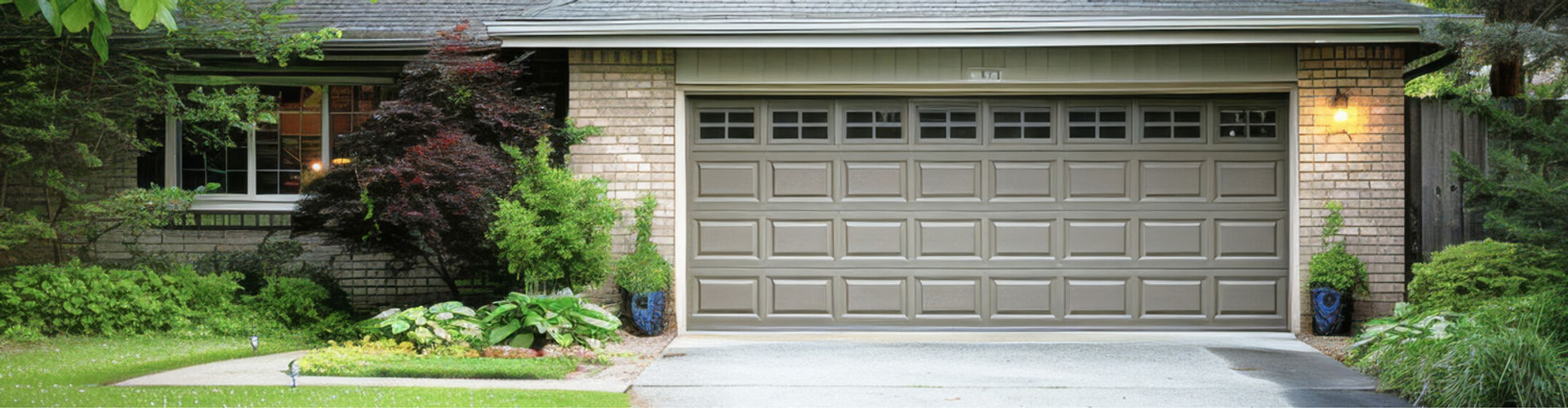
Garage Door Won't Open? What to Check First — and What Never to Touch
By E-Z Open Garage Door Service, Inc. Published
Quick answer
A garage door that won't open usually has one of four causes: no signal or power reaching the opener, a locked or disconnected opener, a broken spring or cable, or a door jammed in its tracks. Homeowners can safely check the wall button, remote batteries, power, the wall-control lock setting and obstructions. If you heard a bang, the door looks crooked or it feels very heavy, stop using it: springs and cables are for a trained technician.
Published · Reviewed
Part of our Garage Door Repair guides.
Why won't my garage door open?
A garage door that won't open almost always has one of four causes: the opener isn't getting a signal or power, the opener is locked or disconnected from the door, the door's counterbalance system (springs and cables) has failed, or the door is physically jammed in its tracks. The first two are things a homeowner can check safely in a few minutes. The last two involve parts under heavy tension and are a job for a trained technician.
The fastest way to narrow it down is to notice what the door and the opener do when you press the button. Silence points one direction, a humming motor points another, and a loud bang earlier in the day points somewhere else entirely.
The sound the opener makes when you press the button is the single most useful clue to why a garage door won't open.
What should I check first when the door won't open?
Start with the checks that involve no tools and no contact with door hardware. Work through them in this order:
- Try the wall button. If the wall button works but the remote does not, the problem is the remote, its battery, or a lock setting, not the door. Our guide to a garage door remote or keypad that isn't working covers that path.
- Look at the opener's lights. If nothing lights up, check that the opener is plugged in, that the outlet has power, and that a breaker or GFCI outlet hasn't tripped.
- Check the lock or vacation setting. Many wall controls have a lock feature that tells the opener to ignore remote commands. One major opener manufacturer notes that a continuously flashing light on the wall control can be a sign this mode is on.
- Look for an obstruction. Anything sitting in the door's path, in the tracks, or blocking the photo-eye sensors can stop the system.
- Check the manual door lock. Some doors have a slide bolt or handle lock on the inside. If it's engaged, the opener will strain against it.
If the door still won't move after these checks, stop pressing the button. Repeatedly running an opener against a door that won't lift can strip the opener's internal gear, which adds a second repair to the first.
A homeowner can safely check power, batteries, the lock setting and obstructions; anything beyond that should be left to a technician.
What does it mean if the opener hums but the door stays shut?
A humming opener with a motionless door means the motor is getting power but its force isn't reaching the door. There are three common reasons: the door has been disconnected from the opener's trolley (usually because someone pulled the emergency release cord), the trolley is jammed against its stop at the end of the rail, or the plastic drive gear inside the opener has stripped.
A stripped gear is rarely the whole story. Openers are designed with a gear that fails before the motor does, and a door that has become heavy because of a weak or broken spring is a frequent reason that gear gives out. That's why a technician checks the door's balance before calling an opener repair finished.
The full breakdown of these three causes is in our guide to an opener that runs while the door won't move. For how sounds are interpreted, see how we diagnose a failing garage door motor over the phone.
A humming opener usually means the motor works but its force isn't reaching the door.
Could a broken spring be why the door won't open?
Yes. A broken spring is one of the most common reasons a garage door suddenly won't open. Springs carry most of the door's weight; the opener only guides a door that the springs have already balanced. When a spring breaks, the door becomes far too heavy for the opener, which may hum, strain, lift the door a few inches and stop, or not move it at all.
Signs of a broken spring include a loud bang from the garage when no one was using the door, a visible gap in a torsion spring above the door, or a door that feels extremely heavy. The Door & Access Systems Manufacturers Association (DASMA) calls springs "arguably the most important and most dangerous part" of a garage door. Our blog explains what actually snaps when a torsion spring breaks.
If you suspect a broken spring, do not try to lift the door by hand and do not keep running the opener. Leave the door where it is and have a technician inspect the whole system.
If you heard a bang and the door suddenly won't open, assume a spring has broken and stop operating the door.
What if the door is crooked, jammed or off its tracks?
A door that sits crooked, has rollers out of the track, or has one side higher than the other should not be opened at all, by the opener or by hand. A crooked door usually means a lift cable has slipped off its drum or broken, which leaves the remaining cable carrying uneven, extreme tension. Forcing that door can bend the track or let the door fall.
Older garages in Central Kentucky add their own wrinkle: tracks mounted to aging framing can shift over years of freeze–thaw cycles and summer humidity, and a door that was always a little tight can bind badly after a season of temperature swings. Our blog covers how fall temperature swings affect garage door tracks.
Read more in our guides to a garage door that's off track or hanging crooked and signs of a frayed or broken cable.
A crooked or off-track garage door is unstable and should not be opened, forced or pushed back into place by hand.
Is it safe to use the manual release to open the door?
The emergency release cord is safe to use only when the door is fully closed and the springs are intact. The release disconnects the door from the opener so it can be moved by hand. With the door closed and resting on the floor, pulling the cord simply lets you lift a properly balanced door, which should feel fairly light and stay in place partway up.
Do not pull the release when the door is open or partly open. If a spring is broken, the springs are no longer holding the door's weight, and a disconnected door can drop suddenly. If, after releasing a closed door, it feels very heavy or won't stay up, lower it gently, stop and call a technician. That heaviness is the spring system telling you something is wrong.
Pull the emergency release only with the door fully closed, and stop if the door feels heavy once it's disconnected.
Which parts should a homeowner never touch?
Torsion springs, extension springs, lift cables, cable drums and the bottom brackets where the cables attach are all under high tension and should be handled only by a trained technician. DASMA's safety guidance states that, because of the dangers of high spring tension, cables "should be replaced only by a trained technician." Adjusting or loosening any of these parts can release stored energy suddenly. Our blog explains the hidden danger of replacing your own extension springs.
Safe homeowner tasks are limited to checking batteries and power, the wall-control lock, the photo-eye sensors (cleaning the lenses and checking that nothing blocks them), looking for visible damage, and lubricating rollers and hinges as part of routine care. If you're not sure what a part is called, see our garage door glossary.
When the cause is a spring, cable or jammed track, a technician diagnoses the whole door and explains the options, which is how our garage door repair visits work. If the door is stuck open after hours and the house can't be secured, our guide to after-hours garage door service explains how to request help.
Springs, cables, drums and bottom brackets store enough energy to cause serious injury and are never homeowner repairs.
Frequently asked questions
Why won't my garage door open with the remote but opens with the wall button?
When the wall button works and the remote doesn't, the door and opener are fine and the problem is the remote, its battery, its programming or a lock setting on the wall control. See our guide to a remote or keypad that isn't working.
Can cold weather stop a garage door from opening?
Cold weather can make a door harder to move by stiffening lubricant, freezing the bottom seal to the floor, or exposing a spring that was already close to failing. Central Kentucky's freeze–thaw swings make winter mornings a common time for doors to stick or springs to break.
How do I open my garage door if the spring is broken?
You shouldn't. A door with a broken spring is extremely heavy and can drop without warning. Leave it closed, don't pull the emergency release on a door that isn't fully closed, and have a trained technician inspect it.
Why does my garage door open a few inches and then stop?
A door that lifts a few inches and stops is often too heavy for the opener because a spring has weakened or broken, or it is binding in the track. Stop operating it, because repeated attempts can strip the opener's gear.
Should I keep pressing the button if the door won't move?
No. Running the opener against a door that won't lift strains the motor and drive gear and can turn one repair into two. After the basic checks, stop and have the door inspected.
Is a garage door that won't open an emergency?
It becomes urgent when a vehicle is trapped, the door is stuck open and the property can't be secured, or the door is hanging crooked. Our blog explains what counts as a true after-hours emergency.
Sources
- DASMA — Safety Tips — springs as the most dangerous part of the door; cables to be replaced only by a trained technician.
- Chamberlain Group Support — The button on the wall works, so why won't my remote control work? — lock (vacation) mode causes the opener to ignore remote commands; flashing wall-control indicator.
- Chamberlain Group Support — How to Get the Trolley off the Stop Bolt or Stop Tab — a humming motor that can't travel when the trolley is lodged against its stop.
Need a technician?
Springs, cables and off-track doors are jobs for a trained technician. We diagnose the door and explain your options.
859-239-9090 Request serviceLet's get you moving again.
Call us, email us, or request your free quote online. After-hours emergency service is available.